St. Vincent DePaul
“Charity is certainly greater than any rule. Moreover, all rules must lead to charity.”
St. Vincent DePaul
“Charity is certainly greater than any rule. Moreover, all rules must lead to charity.”
President Joe Biden is in Brussels today for an emergency NATO summit on Ukraine.
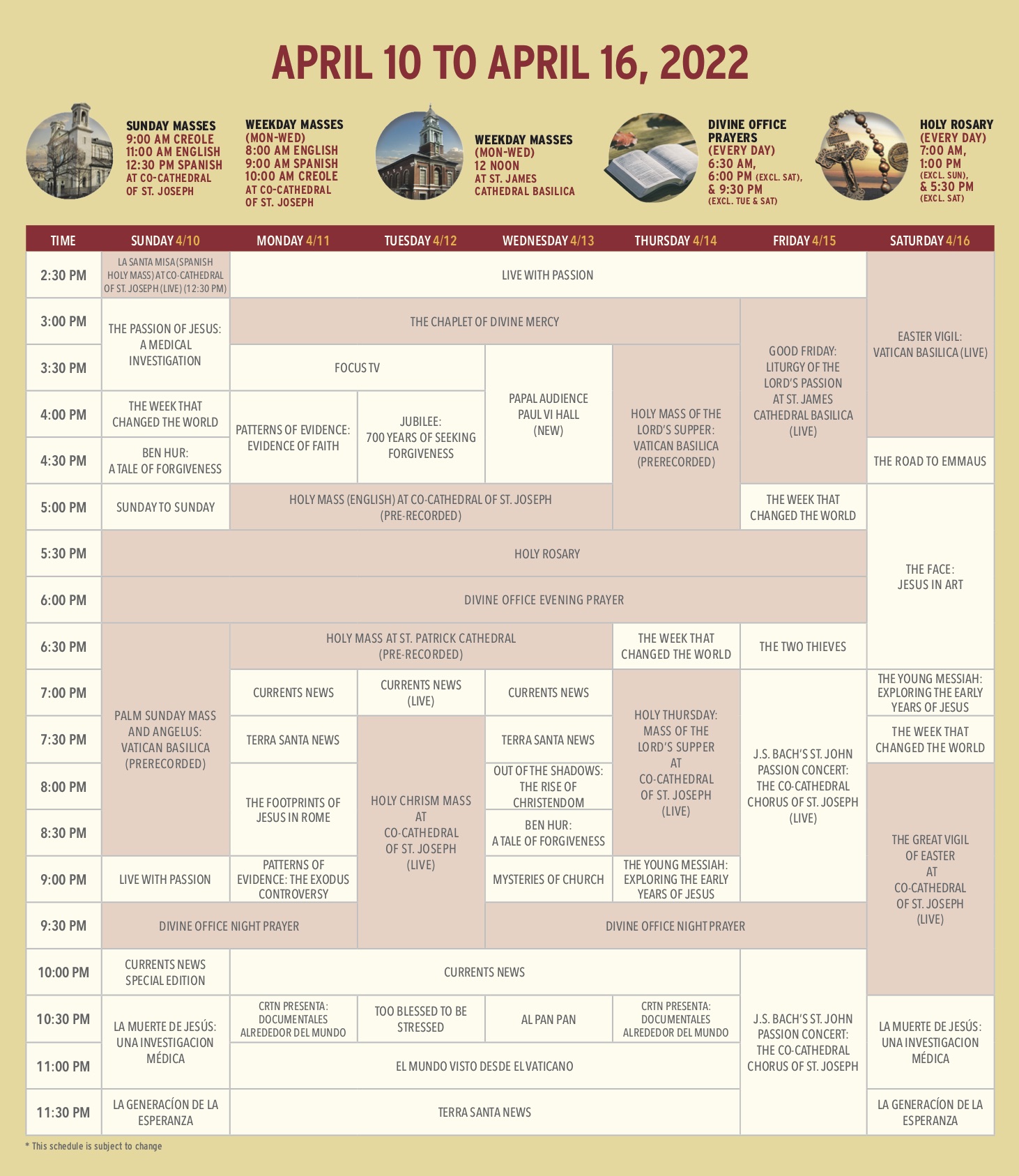
The Pope is doing his part to bring an end to the violence. He’ll consecrate Russia and Ukraine to the Immaculate Heart of Mary this Friday.
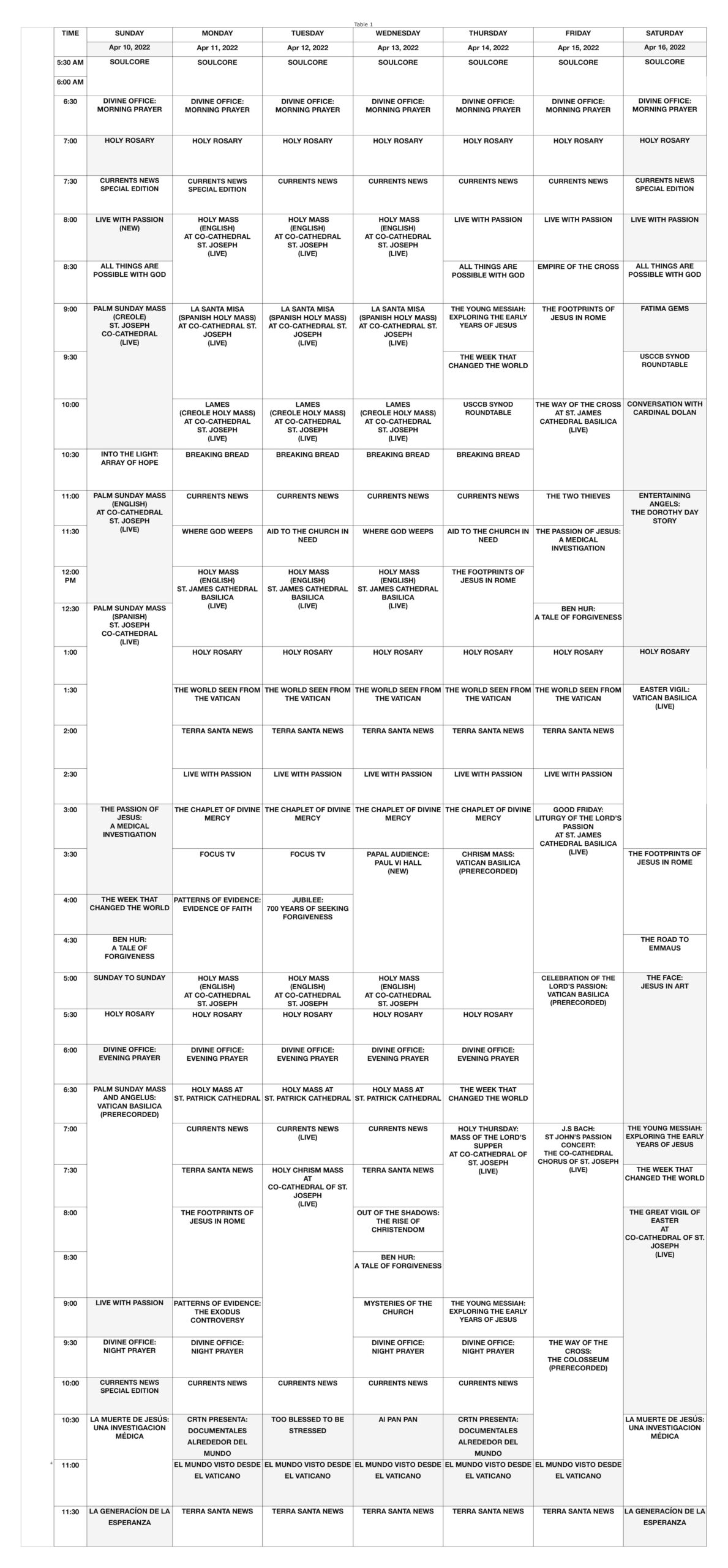
It’s back to normal for Holy Week in Rome. For the first time since 2019 the Stations of the Cross will return to the Colosseum.
Currents News Staff
Thousands of refugees are still making their way to the border while President Joe Biden makes his way to Brussels. There, the president will meet with NATO leaders and other allies Thursday to address the war in Ukraine. The White House says his first objective is to help the Ukrainians.
“The President is traveling to Europe to ensure we stay united on all three critical fronts,” said National Security Adviser Jake Sullivan, “helping the Ukrainian people defend themselves, imposing and increasing costs on Russia and reinforcing the Western alliance.
Ukraine says some hundred-thousand people are trapped in the besieged city of Mariupol.
“I’ve got elderly parents and four pets that I will not leave,” said resident Natalia Hayetska. “Thanks to good people and people who helped it became possible.”
Other Ukrainians are battling to protect the capital, Kyiv, and other cities. The U.N. says more than 3.5 million refugees fled to neighboring countries to escape the fighting.
“I have a little baby,” said refugee Alessandra Ovsiienko. “I love my family. I had plans, and now I don’t have plans.”
Biden’s second goal is to help impose further costs on Russia for its actions. Ukraine’s president has a message.
“You know who is ordering war and who is promoting it,” said President Volodymyr Zelensky. “Almost all of them use Italy as a holiday resort, so do not be a resort for them.”
The trip is also to show the country that the U.S. stands with its allies.
By Currents News and Junno Arocho Esteves
VATICAN CITY (CNS) — The Vatican published Pope Francis’ calendar for Holy Week and Easter, which includes the Way of the Cross at Rome’s Colosseum for the first time in two years.
The annual commemoration of Christ’s passion at the Colosseum was canceled in 2020 due to restrictions on outdoor gatherings to prevent the spread of COVID-19. And in 2021, there was a pared-down Way of the Cross service in St. Peter’s Square.
The Vatican said that Masses on Palm Sunday, Easter Sunday, as well as a canonization Mass May 15 will be celebrated outdoors for the first time since the pandemic began.
As is customary when first publishing the pontiff’s calendar for Holy Week, the Vatican did not provide the time or place for his celebration of the Mass of the Lord’s Supper on Holy Thursday, April 14.
Before the pandemic, Pope Francis had made it a tradition to celebrate the Mass and foot-washing ritual at a prison or detention center, refugee center or rehabilitation facility.
Last year, the pope celebrated a private Mass on Holy Thursday with Cardinal Angelo Becciu, the former prefect of the Congregation for Saints’ Causes, who was forced to resign amid an investigation into suspected financial malfeasance.
The evening Mass of the Lord’s Supper in St. Peter’s Basilica that year was instead celebrated by Cardinal Giovanni Battista Re, dean of the College of Cardinals.
Here is the schedule of papal liturgical ceremonies and event for April and May released by the Vatican March 21:
— April 2-3, Apostolic visit to Malta.
— April 10, Palm Sunday, Mass in St. Peter’s Square.
— April 14, Holy Thursday, morning chrism Mass in St. Peter’s Basilica.
— April 15, Good Friday, afternoon liturgy of the Lord’s passion in St. Peter’s Basilica.
— April 15, Way of the Cross at night in the Colosseum.
— April 16, Easter vigil Mass in St. Peter’s Basilica.
— April 17, Easter morning Mass in St. Peter’s Square, followed at noon by the pope’s blessing “urbi et orbi” (the city and the world).
— April 24, Divine Mercy Sunday, Mass in St. Peter’s Basilica.
— May 15, Canonization Mass in St. Peter’s Square.
Currents News Staff
Life changed in an instant for these families as they were forced to flee their homes as Russian troops invaded. But what do you take with you as you run for safety?
For 11-year old Victoria, it is her beloved teddy bear. Although she outgrew him, he is just the right size for her little sister Valeria.
“It is for Valeria,” said Victoria. “It is her favorite toy… It was mine and now it’s hers. When she is crying a lot, she cuddles him at night.
Tetiana packed as the sound of explosions grew closer and closer to her family’s home in Kyiv.
“When I was gathering my stuff, I knew that I needed to take this,” Tetiana said. “It is the only album with my dad’s pictures in it.”
Her father died when she was six, but pictures of his smile bring comfort.
“I knew the photo album would make me feel calmer,” Tetiana said.
As for 7-year-old Milani, she rushes to grab her favorite thing. It’s easy to see why she loves it.
“Because there are animals in it, and dogs and you can count, here is six, here is four,” Milani said.
Denise was given 10 minutes to leave his university dorm, but he knew what to grab.
“My sunglasses! I adore them!” said Denise. “They make me look cool like Kurt Cobain.”
He said it brings him a sense of calm.
“It makes me feel like everything is going to be fine,” Denise said. “That we will win, and I will walk on the streets of Kyiv under a peaceful sky again.”
The refugee crisis in Ukraine is on course to reach the levels of displacement that followed the war in Syria that drove out 13 million Syrians out of their homes.
Saint Turibius of Mogrovejo
Feast Day March 23rd
Christ said “I am the Truth”, He did not say “I am the custom”‘.
Currents News Staff
While there are no plans for the Holy Father to visit Ukraine any time soon, the Holy Father does have another plan to promote peace. He’ll consecrate Russia and Ukraine to the Immaculate Heart of Mary this Friday. The solemnity will take place at St. Peter’s Basilica. At the same time, priests and bishops from all over the world will be joining him in prayer performing their own consecrations.
The Diocese of Brooklyn will join in all Friday morning. Starting at 8 a.m. from the Co-Cathedral of St. Joseph, Mass will be celebrated in English for the Solemnity of the Annunciation of the Lord, with a prayer for the consecration after.
[Related: Text of Prayer of Consecration for Ukraine, Russia]
That will be repeated in Spanish at 9 a.m. and in Creole at 10 a.m. Bishop Robert Brennan will lead a Holy Hour prayer for peace at St. James Cathedral Basilica, followed by Mass at noon. Then at 1 p.m., you can watch the Vatican consecration right here on NET-TV.
Consecrating Russia and Ukraine on NET-TV
Co-Cathedral of St. Joseph
8 a.m. English Mass
9 a.m. Spanish Mass
10 a.m. Creole Mass
Cathedral Basilica of St. James
11 a.m. Holy Hour with Bishop Brennan
12 p.m. Mass
Vatican
1 p.m. Consecration
Ukraine’s military has retaken a key suburb of Kyiv.
Pope Francis will meet with representatives of Canada’s indigenous communities next week.
Brooklyn Bishop Robert Brennan spent part of his weekend in Queens, praying for people in prison.
Currents News Staff
Ukraine is on the offense as soldiers show their national flag after regaining control of Makariv. They’re threatening Russian re-supply as well as efforts to circle the city.
As the Ukrainian counter-attack appears to make some headway, U.S. officials believe Russian president Vladimir Putin’s next escalation could be a direct cyberattack on the United States.
“We are constantly monitoring our own critical infrastructure here at the Pentagon and throughout the U.S. government to make sure that we can remain resilient against a cyberattack,” said Rear Admiral John Kirby.
It’s an urgent warning to American businesses to strengthen their cyber defenses immediately.
“President Biden has been very clear if we’re attacked in cyberspace,” Admiral Kirby said, “there will be consequences for that.”
The Biden administration says the private sector can guard against cyber attacks by using multi-factor authentication and changing passwords across networks. The alert comes as Russia continues its assault.
“Each day, Mariupol is destroyed more and more,” said Ukraine Deputy Mayor Sergei Orlov. “Until now, estimating 90% of our infrastructure is damaged and destroyed.”
The southeastern port city of Mariupol was once home to more than 450,000 people, but now it’s reduced to rubble. Families are fleeing for their lives unsure of where to go.
“I’m 84 and this was the first time in my life that I felt horror,” said Halyna Zhelezniak. “I couldn’t believe it happened. It was just a shock.”
By Currents News Staff and Michael Swan
TORONTO (CNS) — Beginning March 28, residential school survivors, Indigenous elders and youth will meet with Pope Francis at the Vatican as a prelude to a papal trip to Canada. The Indigenous want an apology, on Canadian soil, for historic abuses they suffered at government-owned residential schools, many of which were run by the Catholic Church.
Religious orders that ran Canada’s schools have apologized, engaged with Indigenous communities, partnered with them on healing projects. Last year, every Canadian bishop apologized for the Catholic Church’s complicity in the government’s program of assimilation, which wreaked havoc on Indigenous families and cultures.
[Related: Two new Canadian Indigenous Leaders to Prioritize Reconciliation]
But if average lay Catholics aren’t involved in some way in reconciliation, will there be reconciliation?
From the Indigenous side of the table, that contact with Catholics in pews matters, said Rachael Crawford-Rendine, co-creator of the Royal Bank of Canada’s first Indigenous employee group and a member of the RBC’s elder council.
Speaking to about 35 members of Ignite, the St. Patrick’s Parish young adult group in Toronto, Crawford-Rendine encouraged the young people to seek out opportunities for reconciliation.
“You have an opportunity to be part of the solution,” said Crawford-Rendine, whose Algonquin spirit name translates into “Blue Morning Dancer.”
Crawford-Rendine considers herself blessed to have been raised in the church and guided by the Indigenous spiritual and cultural values of her father. It gives her a perspective on the world and her own life. She has learned that reconciliation is not easy.
“The listening is the hard part,” she said. “This is definitely an important time for us to come together for listening.”
Getting that listening started in parishes and schools across the country has been a major focus for the Jesuits, who have ordered the Jesuit Forum for Social Faith and Justice to promote listening circles wherever they can.
Last year, the Jesuits teamed up with the Catholic publisher Novalis to produce “Listening to Indigenous Voices,” a kind of guide book for Indigenous and non-Indigenous Canadians to meet in structured encounters, where they can examine Canada’s history and, particularly, the history of residential schools.
Jesuit Forum executive director Mark Hathaway estimates about 4,000 copies of the guidebook have been distributed to schools, parishes and individuals.
That doesn’t translate into 4,000 listening circles. There have been pioneering efforts at the Oblates’ St. Joseph Parish in Ottawa. The Jesuits’ Our Lady of Lourdes Parish in Toronto has begun a series of listening circles. There’s interest at Holy Name Parish, also in Toronto. At St. Ann, home of the Native Peoples’ Mission in Toronto, there’s a modified and simplified version of the “Listening to Indigenous Voices” model running through this spring.
The hope at St. Ann’s is that people from across the Archdiocese of Toronto will get a taste of the listening circles experience and take it back to their own parishes.
The listening circles idea has leaned heavily on the Jesuits’ own resources throughout Ontario: at the Anishinabe Spiritual Centre in Espanola, the Martyrs’ Shrine in Midland, and the Jesuit retreat houses in Guelph and Pickering.
Catholic school boards have expressed interest, and the Jesuit Forum led an introductory session with about 50 social workers from the Toronto Catholic District School Board recently. Getting listening circles into the schools “will take some time,” Hathaway said. There has also been interest at Catholic universities.
If it has been hard to get action on reconciliation started in parishes, it may be because good intentions are not matched by organizational resources, said Sister Patricia Lourdes Lao, a member of the Sisters of Our Lady of the Missions and Native Peoples’ Mission pastoral associate.
“It’s really a marginal work of the church that depends solely on volunteer support and the generous hearts of those who are passionate about reconciliation work,” she said.
Sister Lao said she believes the listening circles model could use some support from higher up.
“We do not have that kind of structural support to enable this to happen in different parishes,” she said. “Even if there is a group of people who are dedicated or interested in having this resource in their localities, there is the problem of funding.”
Finding an elder, connecting with Indigenous people in the community, learning about ways Indigenous spirituality has been incorporated into the liturgy of the Church are big tasks for individual parishes to take on without support.
“There is no office of Indigenous relations, for example. Those are the areas that need to be done before this more public involvement happens, or church involvement happens. It has to be really instituted in the church,” said Sister Lao. “It’s a matter of structure.”
In some parishes, having an elder lead the congregation in a smudging ceremony at the beginning of Mass could be a first step. But it can also be a problem if the people aren’t prepared.
“We have some pushback from Catholics who are not so used to the smudging ceremony and think of it as pagan, or they become afraid of that ceremony,” said Sister Lao.
For urban Catholics who have little or no contact with Indigenous people, there’s a lot to learn about the reconciliation work already going on in rural Canada, on reserves and in small towns, said Redemptorist Father Santo Arrigo.
“In the small towns and the reserves, who is working up there to walk with the people? It’s the church. We have not abandoned the people. We’re with them now,” he said.
If people’s only understanding of reconciliation between the church and Indigenous people comes from news reports the picture is incomplete, Father Arrigo said. The listening circle model has the potential to get Catholics involved in the story: “This puts it front and center.”